
SETTING THE SCENE
WHY AFRICA
A new global economy — and the case for Africa.
The world around us is changing. Long-standing assumptions about how economies function and how businesses operate are being challenged and rethought. Geopolitical conditions are shifting, economies and politics around the world remain under sustained pressure, and governments and businesses are moving from an era defined by interconnectedness towards one increasingly defined by resilience, security and strategic independence.
people on Earth will be African by 2050
annual infrastructure gap by 2030
of the world’s arable land
of the world’s critical mineral reserves

01
Artificial Intelligence & Semiconductors
Advances in AI and semiconductors are becoming foundational enablers of a much broader wave of innovation — from drug discovery and materials science to advanced manufacturing, energy and robotics.
02
Reindustrialisation
Reshoring and friend-shoring have become genuine strategic priorities. Governments and companies alike are rebuilding productive capacity and resilient supply chains within secure markets.
03
Energy & Critical Minerals
Reindustrialisation, the energy transition and AI are driving surging global demand for energy and critical minerals — supply that requires significant capital and long development timelines.
04
The Rise of Africa
By 2050, roughly one in four people on Earth will be African, and 35% of the world’s youth will reside on the continent — an expanding market, a growing workforce and an exceptionally capable diaspora.
THE FOURTH TREND
THE CASE FOR AFRICA
The emergence of Africa as the dominant demographic force on the planet.
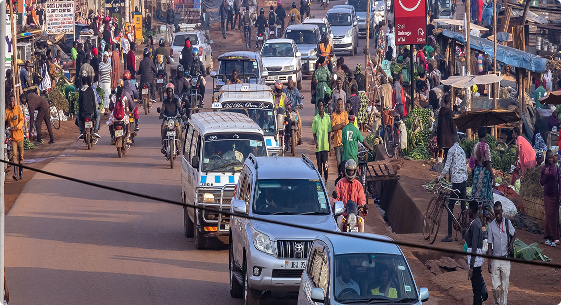
An expanding consumer market driven by an increasing middle-income class, an increasingly socio-politically and economically conscious body politique, a technologically capable population, a workforce continually expanding in both scale and skillset, and an exceptionally capable and increasingly wealthy diaspora that has reached some of the highest levels of professional, entrepreneurial and financial achievement around the world.
What follows is the company’s own reading of the continent — the endowment, the cities where it will be built, and what it asks of global business.
By 2050, roughly one in four people on Earth will be African, and 35% of the world’s youth population is projected to reside on the continent.
THE CONNSTRAINTS
The case for Africa is not a case that the continent has no constraints. It is a case that the constraints are the opportunity, and that they are financeable.
Infrastructure
Africa's infrastructure deficit is one of the greatest constraints on the continent's development, and one of its largest pools of long-term investment opportunity.
Estimated annual infrastructure financing gap by 2030. Source: African Development Bank.
Energy access
Reliable and affordable energy is fundamental to development, and industrialisation will require substantially greater supply than exists today.
600m
People in sub-Saharan Africa without access to electricity.
Digital foundation
Digital infrastructure is becoming foundational economic infrastructure, connecting people, businesses and institutions and enabling entirely new markets.
$240bn
Contribution of mobile technologies and services to Africa’s economy in 2025.
THE CONNSTRAINTS
Four things are true of Africa at the same time, and it is their combination — not any one of them — that constitutes the case.
Reindustrialisation
Africa is becoming the world's principal source of new workers, new consumers and new enterprise, at a moment when much of the rest of the world is ageing. The continent's young and increasingly connected population is not a future market — it is the present one.
Land & water
Africa possesses enormous agricultural potential, including a substantial share of the world's remaining uncultivated arable land. Productivity, processing, logistics, finance and market access remain the constraints — which is precisely where capital can act.
Minerals
The continent holds many of the minerals that are becoming increasingly important to energy, advanced manufacturing, technology and global reindustrialisation. The opportunity is not only in extraction, but in processing and in the value chains built around it.
Integration
The African Continental Free Trade Area is building a single market across 55 countries. It changes what is worth building on the continent, because it changes who can be sold to from within it.
LATENT CAPACITY
UNDERUTILISED POTENTIAL
Latent Productive Capacity
Agricultural potential
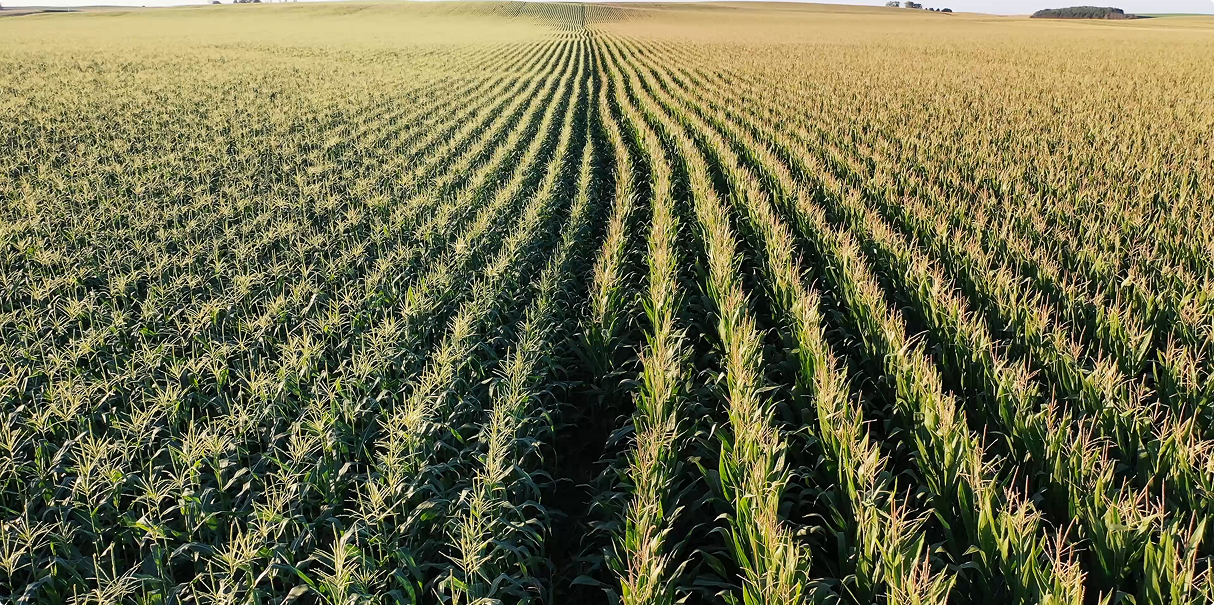
Africa possesses an extraordinary share of the world’s agricultural potential — including approximately 60–65% of the world’s arable land — yet much of this productive capacity remains underutilised.
Critical minerals
The continent is estimated to hold around 30% of the world’s critical mineral reserves, including substantial deposits strategically important to artificial intelligence, robotics, the energy transition and the new wave of reindustrialisation.
Capturing value at home
Across the continent, governments are increasingly seeking to capture more value from their natural resources through domestic processing and industrialisation, with raw mineral export restrictions increasingly discussed and implemented across African capital
A single continental market
At the same time, the African Continental Free Trade Area is building a single continental market spanning 55 countries and more than 1.3 billion people.
IN CLOSING
AFRICA AND THE NEW GLOBAL ECONOMY
Africa’s demographic trajectory and vast development needs will require building at unprecedented scale — and new ways of thinking, building and investing.
That is precisely where Cushland works: mobilising, structuring and allocating private capital to help Africa realise its potential as a central pillar of the new global economy.
LOOKING AHEAD
THE FUTURE IS AFRICAN
No longer an afterthought — a market represented in full.
The future is African, and over the next two and a half decades, the current and next generation of global businesses and multinationals will not be able to afford having Africa as an afterthought, a bonus market or represented by single percentage points on a spreadsheet.
Instead, they will need dedicated African strategies, teams and an increasing willingness to engage with the nuances of individual African markets, their consumers, businesses, institutions and opportunities.
Africa is one of the planet’s last great resource bastions, with substantial natural resources, agricultural potential and human capital that remain significantly underdeveloped relative to their potential. As these resources are increasingly developed, processed and integrated into productive economies, Africa has the potential not only to accelerate its own growth, but to contribute meaningfully to global growth and become an increasingly important source of new markets, industries, technologies and investment opportunities.
THE BIGGER PICTURE
AFRICA AND THE NEW GLOBAL ECONOMY
Africa’s challenges — its structural underdevelopment, jagged urbanisation, vulnerability to the climate crisis and its vast human development needs — combined with Africa’s demographic trajectory and the need to build new infrastructure and productive systems at unprecedented scale, will require new ways of thinking, building and adapting.
Many of the most strategically defining opportunities, the highest-growth stories and some of the great companies of this era will not originate in London, nor in Berlin, Brussels, New York, Tokyo or Seoul, nor will they necessarily be conceived and designed in San Francisco’s Bay Area.
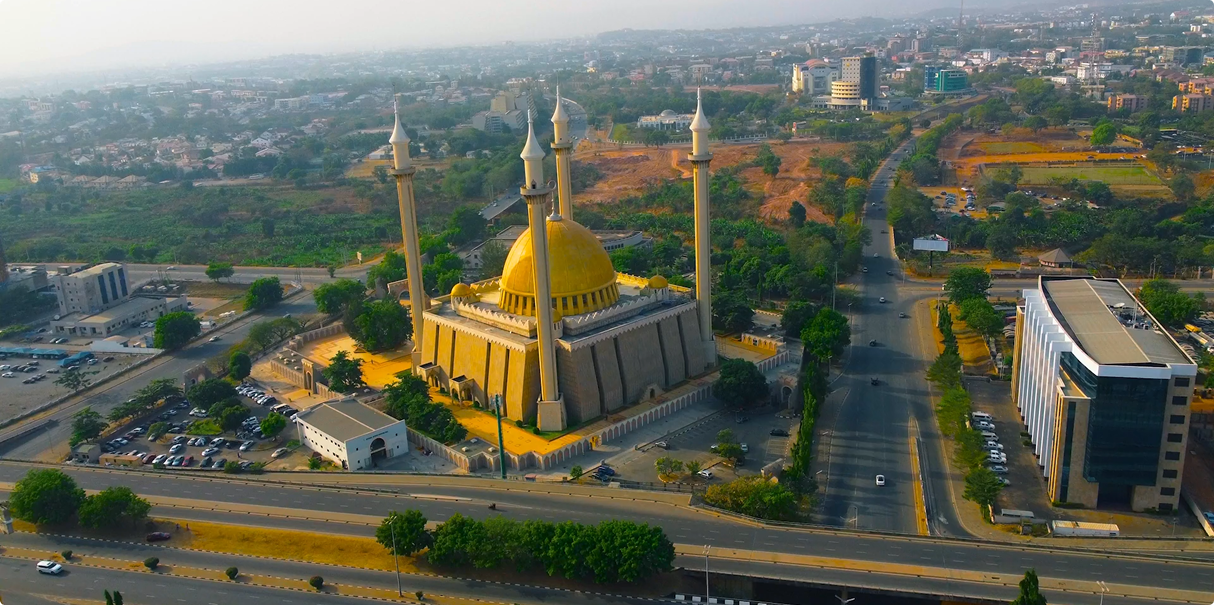
Instead, these stories will be conceptualised, written and told in Dakar, in Djibouti, in Lagos, in Addis Ababa, in Kigali, in Nairobi, in Casablanca, Kano, Accra and many other African cities across the continent.
African nations and Africa’s youth population have entered a new era of socio-political and economic consciousness. Technology sectors and innovations to meet these challenges are growing, as Africa’s people become increasingly aware of their potential and increasingly determined to build for the future.
SPIRITUAL CAPITAL